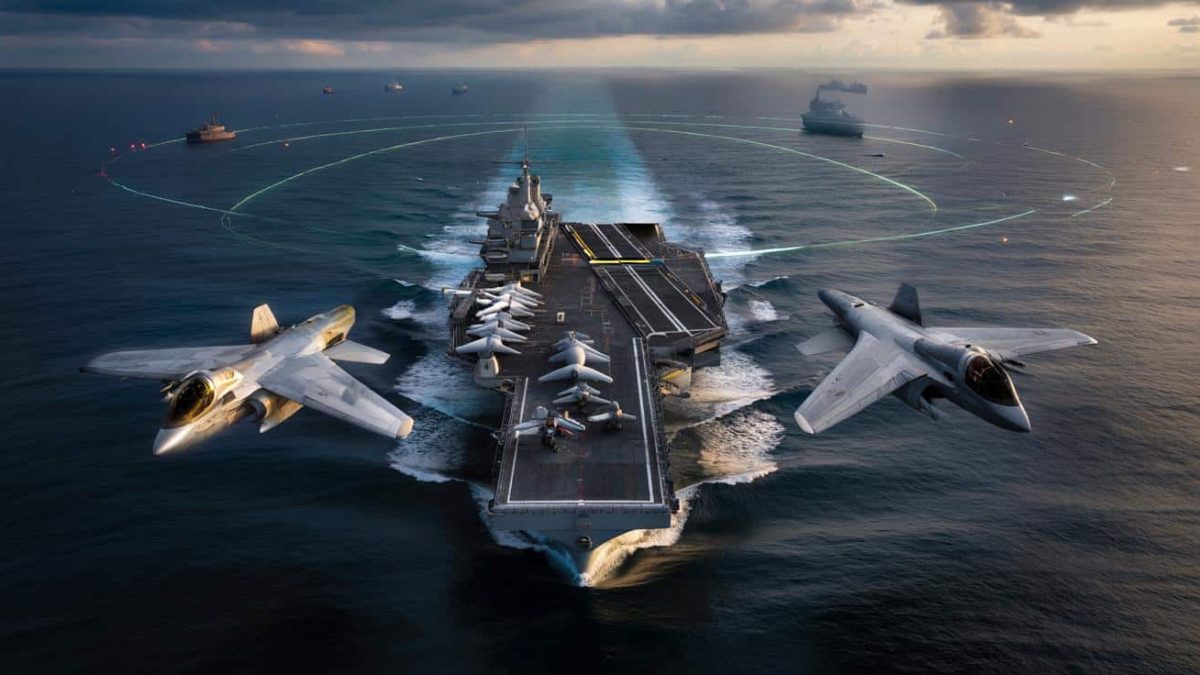
In the vast expanse of the Pacific, a new silent giant is emerging – the Chinese aircraft carrier “Fujian.” Unlike its predecessors, this behemoth of steel is set to redefine the balance of power in the region, becoming a virtually untouchable force to be reckoned with.
Satellite imagery and official footage may initially suggest the Fujian is just another colossal warship, but a closer examination reveals a vessel that is anything but ordinary. China has meticulously engineered this carrier to become a ghost in the sea, a technological marvel that will challenge the established order.
The Tactic: See Before Being Seen
The Fujian’s design philosophy revolves around the principle of stealth and evasion. Gone are the days of bulky, easy-to-spot carriers – this vessel has been crafted to blend seamlessly into its surroundings, making it an elusive target for potential adversaries.
Innovative radar-absorbing materials and advanced electronic countermeasures have been employed to minimize the Fujian’s signature, making it harder to detect and track. This strategic approach aims to shift the advantage, forcing opponents to play a game of cat and mouse in the open waters.
- ➡Schockreporter! Rosmarinwasser – Das verblüffende Geheimnis, das deine Haut liebt!
- ➡Mit 65 wieder fit werden: Der einfache Trainingsplan für einen sicheren Neustart
- ➡Überraschende Entdeckung: Das Geheimnis des gemeinsamen Schlafens
- ➡Achtung! Diese 3.000 Hühner suchen dringend ein neues Zuhause – das Können Sie jetzt tun!
The implications are clear: China is no longer content with simply building bigger carriers; it is seeking to create a new paradigm in naval warfare, where the ability to remain unseen becomes a formidable weapon.
Electromagnetic Catapults: Range as a Weapon
The Fujian’s true power lies in its cutting-edge launch system. Abandoning the traditional steam-powered catapults, China has opted for an electromagnetic launch system (EMALS) – a technology that promises to revolutionize aircraft operations at sea.
By harnessing the power of electromagnetism, the Fujian can propel aircraft with greater force, allowing for longer-range strikes and increased payload capacity. This technological leap not only enhances the carrier’s offensive capabilities but also expands its strategic reach, enabling it to project power further into the region.
Moreover, the EMALS system is designed to be more efficient and reliable, reducing maintenance requirements and increasing the Fujian’s operational availability. This translates to a more agile and responsive carrier force, capable of adapting to rapidly changing scenarios.
- ➡Sie werden es nicht glauben – wie oft sich über 65-Jährige duschen sollten!
- ➡Wie Sie erkennen, ob Sie jemandem vertrauen oder nur hoffen, dass er bleibt
- ➡Die erstaunliche Wahrheit über die Eiermulde in deinem Kühlschrank
- ➡12 Überraschende und stylische DIY-Ideen für ausrangierte Löffel, die du garantiert noch nicht kennst!
Airborne Radars: The Heartbeat of Air Superiority
Complementing the Fujian’s stealth and launch capabilities is a fleet of advanced early warning aircraft. These flying radars, known as the KJ-600, act as the carrier’s eyes and ears, providing critical intelligence and coordination for air operations.
By integrating the KJ-600 into the carrier’s ecosystem, China has created a formidable aerial surveillance and command network. These airborne platforms can detect threats from great distances, allowing the Fujian to prepare and respond swiftly to any potential challenges.
The strategic implications are profound. With the ability to see and dominate the skies, the Fujian and its accompanying air wing can establish air superiority, denying adversaries the freedom to maneuver and operate in the contested airspace.
The Strategic Stage: Hainan and the South China Sea
The Fujian’s deployment is not merely a technical achievement; it is a strategic chess move in China’s broader regional ambitions. The carrier’s homeport on the island of Hainan, situated in the heart of the South China Sea, places it at the center of a geopolitical tug-of-war.
- ➡Das verblüffende Geheimnis hinter Dacias Elektro-Offensive: Kleine Stromer für unter 18.000 Euro!
- ➡Ihre Rückenschmerzen haben einen geheimen Grund – und der Orthopäde weiß es!
- ➡Vergiss 10.000 Schritte – Diese effizientere Übung solltest du jetzt ausprobieren!
- ➡Das Erstaunliche Hausrezept, das dein Sofa wie Neu aussehen lässt (Jeder hat es in der Küche!)
From this strategic location, the Fujian can project power and influence throughout the contested waters, reinforcing China’s claims and deterring potential challenges to its maritime interests. The carrier’s ability to remain elusive and exert air dominance further solidifies China’s position in this vital, resource-rich region.
As the Fujian takes its place in the South China Sea, it stands as a symbol of China’s growing naval prowess and its determination to shape the regional balance of power according to its own vision.
The Lesson in China’s Timing
The rapid development and deployment of the Fujian carrier reveal intriguing insights into China’s strategic learning curve. The country’s previous carriers, the Liaoning and Shandong, served as testbeds for refining its carrier operations and technologies.
Now, with the Fujian, China has leveraged these lessons to create a platform that is not only more capable but also more survivable in the face of potential conflicts. The timing of the Fujian’s unveiling suggests a deliberate and patient approach, one that has allowed China to learn, adapt, and ultimately unveil a game-changing asset.
- ➡Das Pokémon-Studio Game Freak entwickelt ein neues Spiel, das besser aussieht als ihre Erfolgsmarke – Fühlen sich Fans betrogen?
- ➡Haben Pflanzenfresser Ihren Garten übernommen? Das müssen Sie jetzt wissen!
- ➡Das große Geheimnis: Warum „porc” und „cochon” nicht dasselbe bedeuten
- ➡Schockierende Wendung in Netflix-Serie: Nobelpreisträger gerät in verbotene Liebe in Istanbul
This measured progress underscores China’s long-term vision and its commitment to building a formidable naval force that can project power and influence across the Indo-Pacific region.
Decoding the Carrier Vocabulary
To fully grasp the significance of the Fujian, it’s essential to understand the specialized terminology that surrounds modern aircraft carriers. Terms like “CATOBAR” (Catapult Assisted Take-Off But Arrested Recovery) and “early warning aircraft” are key to unraveling the carrier’s capabilities.
CATOBAR systems, as seen on the Fujian, enable the launch of aircraft using electromagnetic catapults, while also allowing for a controlled landing using arresting wires. This combination of launch and recovery systems grants the carrier greater operational flexibility and the ability to handle a wider range of aircraft types.
The deployment of early warning aircraft, like the KJ-600, further enhances the carrier’s situational awareness and command capabilities, allowing it to coordinate air operations and maintain a tactical edge over potential adversaries.
- ➡Das Geheimnis der einen Frage, die jedes Gespräch revolutioniert
- ➡Europas verborgener Lithium-Schatz – Industriebooster oder Umweltkatastrophe?
- ➡Der unglaubliche Zeitsparer, den niemand kennt – aber jeder nutzen sollte!
- ➡Enthüllungen über Japans neuesten Hyperschall-Raketen: Wie sie Chinas Militär herausfordern
Risks and Limitations of China’s Strategy
While the Fujian’s technological advancements and strategic positioning are undoubtedly impressive, it’s important to consider the potential risks and limitations of China’s carrier strategy.
The reliance on advanced, yet unproven technologies, such as the electromagnetic launch system, introduces an element of uncertainty. Any technical failures or malfunctions could significantly impact the carrier’s operational readiness and combat effectiveness.
Moreover, the Fujian’s focus on stealth and evasion may come at the cost of raw offensive power, as the carrier’s ability to launch a large number of aircraft simultaneously could be compromised. This trade-off between survivability and striking power must be carefully balanced to ensure the Fujian remains a formidable force in the region.
Despite these challenges, the Fujian’s emergence signals China’s unwavering commitment to building a world-class naval force, one that can assert its influence and safeguard its strategic interests in the contested waters of the Indo-Pacific.
- ➡Dieses simple Boden-Hack wird Ihren Garten mit Nährstoffen fluten – ohne einen Cent auszugeben!
- ➡Vergiss trockenes, kraftloses Haar! Diese 8 Shampoos verleihen sofort mehr Fülle und Volumen
- ➡Diese neue Mücke aus Afrika ist eine echte Plage in französischen Gärten – so erkennst du sie jetzt!
- ➡Diese Routine hilft, Schlafqualität zu verbessern, indem du Dunkelheit bewusst nutzt
| Key Specifications of the Fujian Aircraft Carrier | Value |
|---|---|
| Displacement | 80,000 metric tons |
| Length | 320 meters |
| Width | 78 meters |
| Flight Deck Length | 283 meters |
| Aircraft Capacity | Over 80 |
| Propulsion | Integrated Electric Propulsion |
| Comparison of Chinese Aircraft Carriers | Liaoning | Shandong | Fujian |
|---|---|---|---|
| Commissioning Year | 2012 | 2019 | 2022 |
| Launch System | Ski-jump | Ski-jump | CATOBAR |
| Displacement | 60,000 metric tons | 66,000 metric tons | 80,000 metric tons |
| Aircraft Capacity | Up to 36 | Up to 44 | Over 80 |
“The Fujian represents a significant leap in China’s aircraft carrier capabilities. Its advanced design and technologies will challenge the existing power dynamics in the region.”
– Dr. Mei Xinyu, Senior Research Fellow at the Chinese Academy of International Trade and Economic Cooperation
Also Read
- ➡Das einfache Natron-Geheimnis für blitzsaubere Küchenschränke
- ➡Vergiss das Unkrautjäten – Mit diesen bodendeckenden Wundern machst du deinen Garten pflegeleicht!
- ➡Verborgene Perle vor der Riviera: Diese Insel ist ein Naturjuwel im Mittelmeer
- ➡Die stille Erschöpfung der Vermittler – Das unerkannte Leid der Neutralen
“China has clearly learned from its earlier carrier experiences and is now poised to project power in ways that will force the United States and its allies to recalibrate their own naval strategies in the Indo-Pacific.”
– Admiral (Ret.) James Stavridis, Former NATO Supreme Allied Commander
“The Fujian’s electromagnetic launch system and stealth features are game-changers that will require a rethinking of how we approach carrier operations in the 21st century.”
– Dr. Toshi Yoshihara, Senior Fellow at the Center for Strategic and Budgetary Assessments
Also Read
- ➡Die 10 besten Sommerblüher für Balkon und Garten – so pflanzt du sie jetzt!
- ➡Schockierende Wahrheit! Juckreiz auf der Kopfhaut kann mehr bedeuten als nur Schuppen
- ➡Schocknachricht: Mit dieser billigen Isolierung sparen Sie diesen Winter 60€ auf Ihrer Stromrechnung!
- ➡Drei Übungen, die laut Physiotherapeuten das Gleichgewicht verbessern
As the Fujian takes its place in the South China Sea, it stands as a testament to China’s relentless pursuit of naval dominance. This carrier’s technological advancements and strategic positioning have the potential to reshape the geopolitical landscape of the region, challenging the established order and forcing the international community to adapt to a new era of maritime power projection.
What sets the Fujian apart from China’s previous aircraft carriers?
The Fujian is equipped with advanced technologies like electromagnetic catapults and radar-absorbing materials, allowing it to remain largely undetected and project power more effectively than China’s earlier carriers, the Liaoning and Shandong.
How does the Fujian’s strategic placement in Hainan influence China’s regional ambitions?
By basing the Fujian on the island of Hainan, China can exert greater control and influence over the South China Sea, a region of vital strategic importance. The carrier’s ability to project power from this location reinforces China’s claims and deters potential challenges to its maritime interests.
What are the potential risks and limitations of the Fujian’s design?
The Fujian’s reliance on unproven technologies, such as the electromagnetic launch system, introduces uncertainties about its operational reliability. Additionally, the focus on stealth and survivability may come at the cost of raw offensive power, requiring a careful balance to ensure the carrier remains a formidable force.
- ➡Himmelssteine im Vorgarten: Das versteckte Vermögen und wer die Reparaturen bezahlt
- ➡Das Ende einer Flugzegende: Letztmaliger Flug des legendären Airbus Beluga über Hamburg
- ➡Überraschung! Diese 35 Sprüche für die Korallenhochzeit werden Ihr Herz schmelzen lassen
- ➡Unglaubliche 3D-Aufnahmen zeigen das Wrack der USS Monitor wie noch nie zuvor!
How does the Fujian’s development reflect China’s strategic learning curve?
The rapid deployment of the Fujian, building on the lessons learned from China’s earlier carrier programs, demonstrates the country’s strategic patience and commitment to developing a world-class naval force. The Fujian’s technological advancements signify China’s growing expertise in carrier operations and its ambition to project power on a global scale.
What does the Fujian’s launch mean for the regional balance of power in the Indo-Pacific?
The Fujian’s emergence as a highly capable and virtually undetectable aircraft carrier will force the United States and its allies to reconsider their naval strategies in the Indo-Pacific. This shift in the regional power dynamics could lead to increased tensions and a need for a recalibration of alliances and security arrangements.
How does the Fujian’s technology compare to that of other modern aircraft carriers?
The Fujian’s electromagnetic launch system and advanced stealth features set it apart from traditional aircraft carriers. These technologies, while not yet fully proven, have the potential to significantly enhance the carrier’s operational capabilities and survivability, challenging the conventional approaches to naval warfare.
What role do the Fujian’s accompanying airborne radar systems play in its overall strategy?
The integration of advanced early warning aircraft, like the KJ-600, into the Fujian’s operational ecosystem provides the carrier with enhanced situational awareness and improved command and control capabilities. This allows the Fujian to better coordinate air operations and maintain a tactical edge over potential adversaries.
- ➡Werfen Sie leere Klopapierrollen nicht weg: Warum sie ein echtes Alltagsschatzstück sind
- ➡Die Wissenschaft hinter dem Flow-Zustand: Wie du in unter 10 Minuten in totale Konzentration gelangst und dabei produktiver wirst als je zuvor
- ➡Enthülle das Geheimnis: Wann ist der perfekte Zeitpunkt, um deine Monstera umzutopfen?
- ➡Der große Schnee-Schock: Diese Regionen frieren am heftigsten ein!
How does the Fujian’s size and displacement compare to other Chinese aircraft carriers?
The Fujian is significantly larger than China’s previous aircraft carriers, the Liaoning and Shandong, with a displacement of 80,000 metric tons. This increased size and carrying capacity enable the Fujian to accommodate a greater number of aircraft, enhancing its overall striking power and operational range.